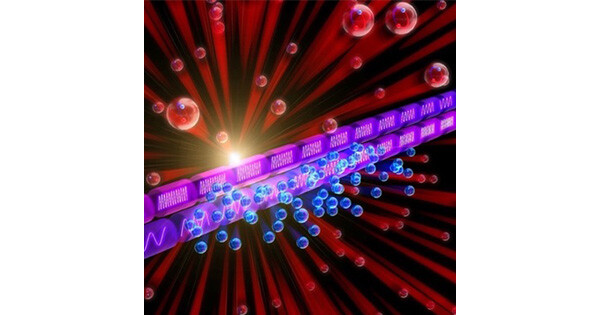
Objects at finite temperatures emit light (electromagnetic waves) as thermal radiation. Wavelength-selective control of thermal radiation, namely concentrating the emitted spectrum into a desired wavelength band, is a key challenge for next-generation energy technologies. A representative example is thermophotovoltaic (TPV) power generation, which converts heat into electricity by directing thermal radiation onto photovoltaic cells. Large amounts of heat in the mid-temperature range (approximately 700–1000°C) are available in society, for example from industrial furnaces, incinerators, and high-temperature fuel cells. In this temperature range, however, most of the thermal radiation from ordinary materials is emitted at mid- and far-infrared wavelengths that photovoltaic cells cannot convert into electricity. Efficient TPV in the mid-temperature range therefore requires precise spectral control of radiative heat transfer, and thermal emitters that confine their emission to a narrow near-infrared band offer one promising route.
The research team has succeeded for the first time in observing exciton thermal radiation, namely thermal radiation with a sharp emission peak originating from the excitonic effect, a type of quantum effect, from macroscale membranes of structure-sorted (chirality-sorted) single-walled carbon nanotubes (SWCNTs) heated via thermal conduction from a heater. The team also demonstrated that a planar four-layer device structure composed of SWCNT and transparent dielectric layers can enhance the peak intensity of the exciton thermal radiation to nearly 80% of the thermodynamic limit. These results reveal that SWCNT membranes possess thermal photophysical properties that differ greatly from those of conventional semiconductors, and they provide a promising route toward high-performance wavelength-selective thermal emitters, a key component for highly efficient TPV power generation in the mid-temperature range.

Papers
Journal: Nature Communications
Title: Exciton thermal radiation from macroscale membranes composed of chirality-sorted carbon nanotubes and its control
Authors: Akiteru Takahashi†, Mioko Hizukuri†, Kaichi Teranishi†, Shonosuke Takaichi, Taishi Nishihara*, and Yuhei Miyauchi* (†: equally contributed, *: corresponding authors)
DOI: 10.1038/s41467-026-75711-4
Observation of the three-dimensional polarization vector in films of organic molecular ferroelectrics using terahertz radiation emission
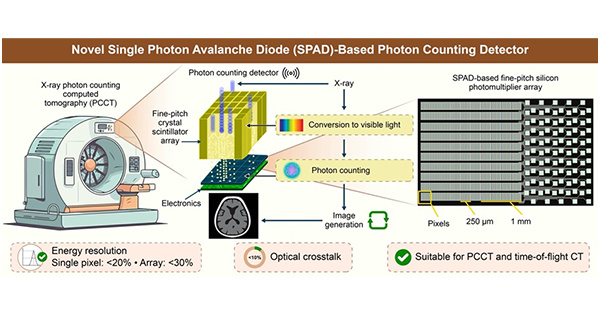
Silicon-photomultiplier and scintillator based Multi-color photon counting detector for computed tomography