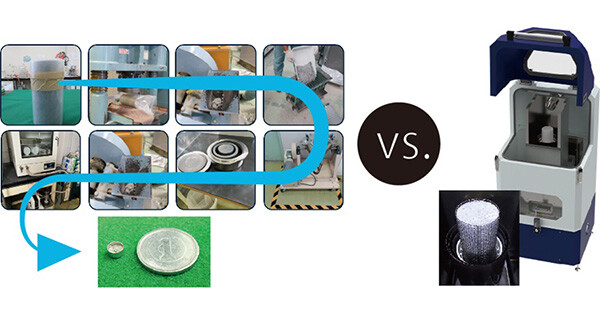
Development of a New Method to Eliminate Atmospheric Influence and Quantify Fossil Fuel-Derived CO2 Sequestration
Key Points
- Development of an Accurate Evaluation Index: The research team successfully identified and quantified CO2 derived from specific sources (such as fossil fuels in factory exhaust gas) within the total CO2 absorbed by cementitious materials, utilizing carbon isotope ratios (13C/12C and 14C/12C).
- Optimizing the Measurement "Yardstick": For mixed-gas environments where conventional standard calculation methods were prone to errors, a new calculation model was introduced to properly correct for the effects of isotopic fractionation, dramatically improving the accuracy of analytical results.
- Contributing to the Visualization of Decarbonization: This method makes it possible to scientifically prove the amount of fossil fuel-derived CO2 sequestered by concrete products, thereby enhancing the reliability of environmental labels and carbon credits.
A research team led by Professor Ippei Maruyama, Assistant Professor Ryo Kurihara, and Graduate Student Ryusei Igami from the Graduate School of Engineering at The University of Tokyo; Professor Masayo Minami from the Institute for Space-Earth Environmental Research at Nagoya University; Assistant Professor Aili Abudushalamu from the Graduate School of Environmental Studies at Nagoya University (at the time of the research; currently Associate Professor at the Graduate School of Advanced Science and Engineering, Hiroshima University); and Senior Researcher Hiroshi Takahashi from the National Institute of Advanced Industrial Science and Technology, has developed an evaluation method to identify the origin and accurately calculate the amount of CO2 sequestered in cementitious materials by using carbon isotope ratios (13C/12C and 14C/12C) as indicators.
In recent years, CCUS (Carbon dioxide Capture, Utilization, and Storage) technologies, which involve absorbing and trapping CO2 in concrete, have attracted significant attention. However, during processes such as accelerated carbonation tests, the intrusion of atmospheric CO2 has made it difficult to evaluate the net amount of sequestration originating from specific sources (such as those derived from fossil fuels).
In this study, the team conducted carbonation experiments using fossil fuel-derived CO2 gas, which contains no radiocarbon (14C), and analyzed in detail the behavior of both the stable isotope ratio (13C/12C) and the ratio of the radioactive isotope to the stable isotope (14C/12C). As a result, they established a practical framework to detect and quantify trace atmospheric contamination, enabling the calculation of CO2 sequestration while clearly distinguishing between different sources. This achievement ensures the reliability of carbon storage in building materials and provides a foundation for evaluating resource circulation to realize a decarbonized society.

Papers
Journal: Cement and Concrete Research
Title: Quantification of sequestered fossil-derived CO₂ in cementitious materials and its atmospheric contamination using carbon isotope measurements
Authors: Ippei Maruyama, Ryusei Igami, Ryo Kurihara, Masayo Minami, Hiroshi A. Takahashi, Abudushalamu Aili
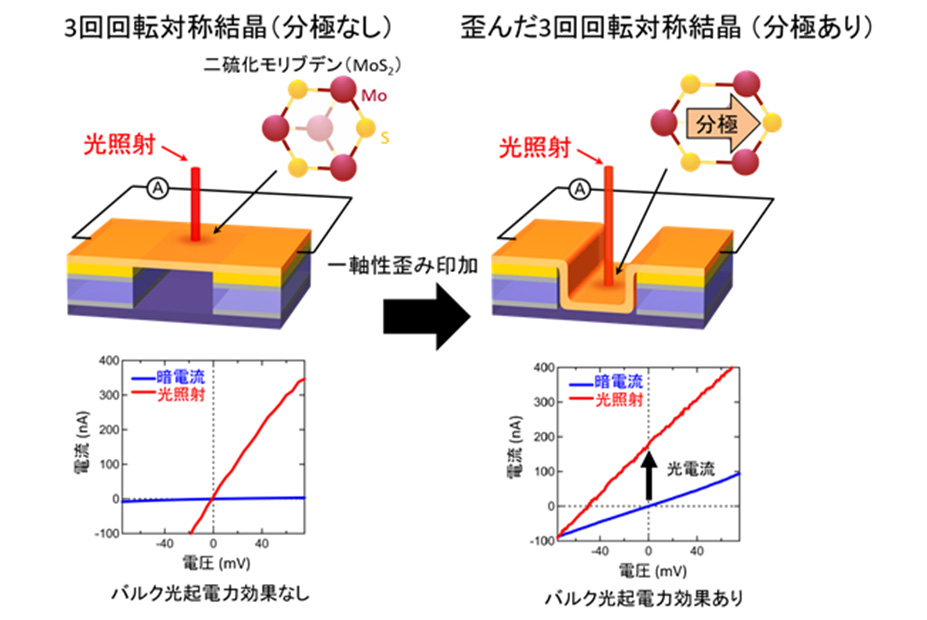
Giant bulk piezophotovoltaic effect in 3R-MoS2
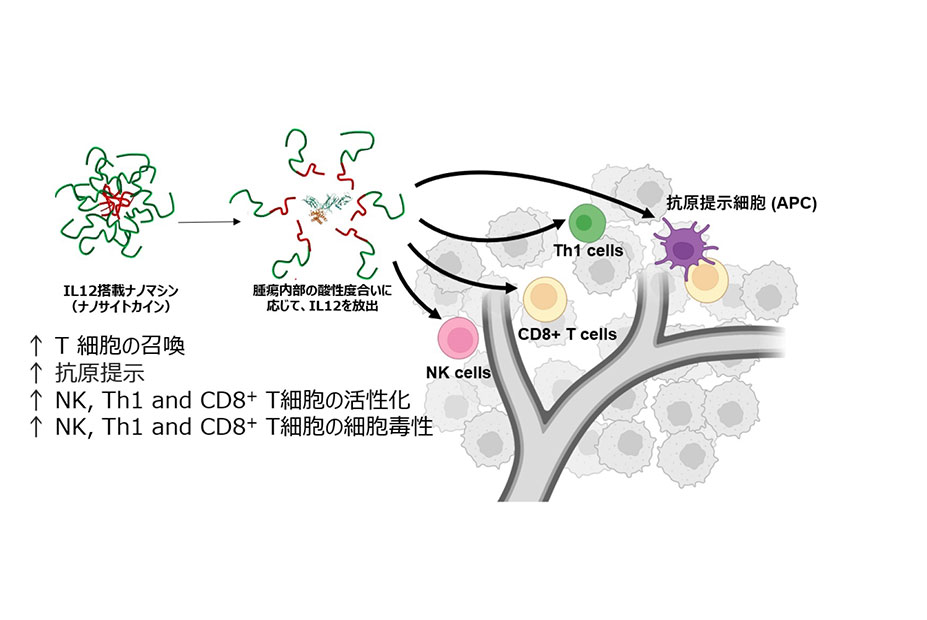
An IL-12-Based Nanocytokine Safely Potentiates Anticancer Immunity through Spatiotemporal Control of Inflammation to Eradicate Advanced Cold Tumors