

A research team at the University of Tokyo has developed an operational framework for determining when quantum many-body pure states behave like thermal states, based on the amount of work that can be extracted using local operations and classical communication (LOCC). Typical quantum many-body states differ greatly from thermal states when considered as a whole, even though they are almost indistinguishable from thermal states through strictly local measurements. However, it remained unclear whether this equivalence persists when measurement outcomes can be shared and used to coordinate subsequent local operations.
The team formulated the thermodynamic work that can be extracted from a quantum state under LOCC and derived an upper bound in terms of a measure of multipartite quantum entanglement. This bound shows that highly entangled states, including Haar-random states and random graph states, cannot yield extensive work under LOCC. In contrast, the researchers demonstrated that states with simpler entanglement structures can yield extensive work under LOCC, even when they are indistinguishable from thermal states through local observations alone.
These results reveal that thermal equivalence under LOCC is governed by the structure of multipartite quantum correlations. The findings provide a new perspective on thermal behavior in quantum many-body systems and may inform the design of quantum heat engines that harness correlations stored in quantum states.

Schematics of work extraction under (a) global operations, (b) LOCC, and (c) local operations.
Papers
Journal: Physical Review Letters
Title: Testing the Equivalence to Thermal States via Extractable Work under Local Operations and Classical Communication
Authors: Toshihiro Yada, Nobuyuki Yoshioka, Takahiro Sagawa
DOI: 10.1103/zsb1-gx7f
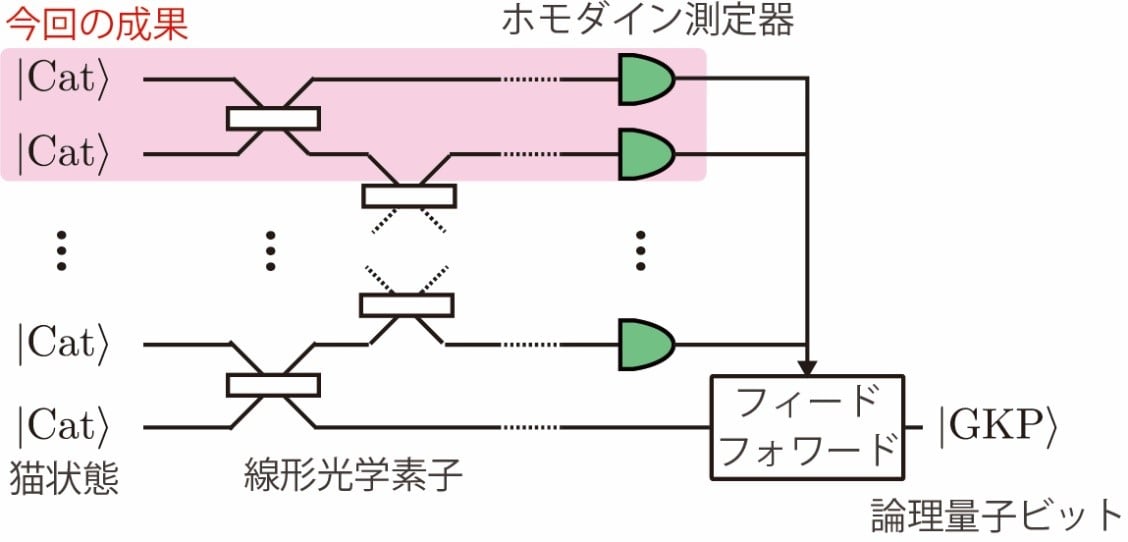
Logical states for fault-tolerant quantum computation with propagating light
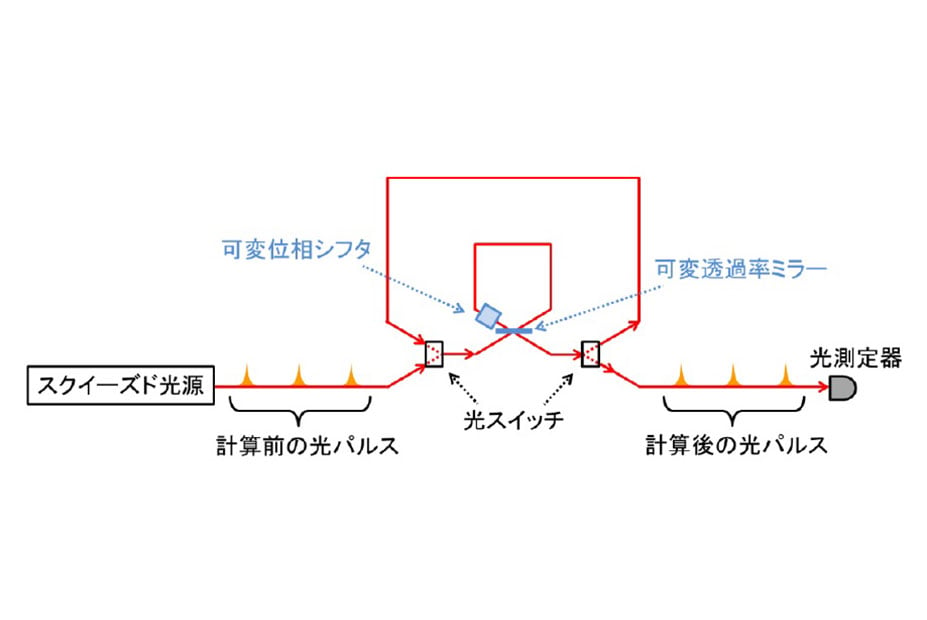
Time-Domain Universal Linear-Optical Operations for Universal Quantum Information Processing
