

Efforts to adapt to climate change have focused overwhelmingly on physical infrastructure, planning systems and administrative mechanisms, while largely overlooking mental health. In this Comment in Nature Climate Change, the University of Tokyo research team argues that mental health should not be treated merely as a passive outcome of climate adaptation, but as a key determinant of people’s cognitive capacity to perceive risks, process information, make decisions and act. In this way, it also shapes how effective adaptation can be.
The team highlights that mental health plays a dual role. Climate change directly harms it through solastalgia, eco-anxiety, climate trauma and grief, while in turn, poor mental health erodes risk perception, information processing and collective action, driving maladaptive responses such as denial and avoidance. These burdens are distributed unevenly: they intersect with existing economic, health and social inequalities and fall most heavily on children, older people, migrants and outdoor laborers, who face high exposure yet low adaptive capacity.
To close this blind spot, the team sets out concrete pathways for embedding mental health into adaptation at two levels. In assessment, this means evaluating the psychological effects of measures such as greenspace, relocation, livelihood shifts and early-warning systems. In policy, it means combining top-down and bottom-up, equity-focused approaches that prioritise vulnerable groups. Integrating mental health, they argue, is essential to achieving fairer and more effective climate adaptation.

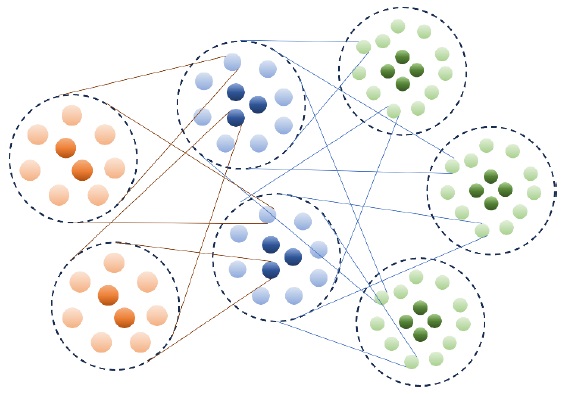
Figure 1. Framework of this study: how mental health burdens intersect with health, social and economic disparities and make climate adaptation more difficult.
Papers
Journal: Nature Climate Change
Title: Mental health as both outcome and determinant in climate adaptation
Authors: Yin Long*, Ziyi Zhou, Yuya Kajikawa, Kimitaka Asatani*, Ichiro Sakata, Yoshikuni Yoshida (*Corresponding author)
Time-Efficient Constant-Space-Overhead Fault-Tolerant Quantum Computation

A New Ultrafast Imaging Method Connects Dynamics Across Five Orders of Magnitude in Time in a Single Shot
