A research team led by Tsutomu Suzuki at the University of Tokyo has discovered a new mechanism by which oxidative stress directly regulates protein synthesis by chemically altering transfer RNA (tRNA) molecules.
tRNAs decode genetic information by matching messenger RNA (mRNA) codons with their corresponding amino acids on the ribosome. Many tRNAs carry specialized chemical modifications in their anticodons to ensure accurate and efficient translation. One important class of modifications, known as 5-methyl-2-thiouridine derivatives (xm5s2U), contains sulfur and is essential for decoding purine-ending codons for lysine, glutamate, glutamine, and arginine.
In this study, the researchers found that these sulfur-containing modifications undergo oxidative desulfuration in human cells and mouse tissues, forming 4-pyrimidinone derivatives (xm⁵h²U). Using mass spectrometry and rigorous spike-in validation experiments, they confirmed that these desulfurized nucleosides are generated naturally in cells rather than during sample preparation.
Functional analyses revealed that this chemical conversion significantly impairs protein synthesis. In a reconstituted human cell-free translation system, desulfurized tRNAs showed markedly reduced translational activity. Biochemical assays demonstrated that desulfuration decreases aminoacylation efficiency of tRNAs for lysine, glutamate, and glutamine. Furthermore, ribosome-binding experiments showed that desulfurized tRNALys nearly loses the ability to decode the AAA codon and shows strongly reduced recognition of AAG.
High-resolution cryo-electron microscopy structures of ribosome–tRNA complexes revealed the structural basis of this effect. The loss of the sulfur atom weakens codon–anticodon interactions, leading to unstable base pairing and impaired decoding.
Importantly, desulfurized tRNAs were detected in polysome fractions, indicating that they participate in translation in cells, though less efficiently. These findings suggest that 2-thiouridine modifications function as molecular sensors of cellular redox state. Under oxidative conditions, partial desulfuration fine-tunes codon-specific translation.
This study uncovers a new layer of translational regulation linking oxidative stress to direct modulation of the genetic code.
 Desulfuration of 2-thiouridine derivatives occur in tRNA anticodon
 Proposed mechanism of translational regulation mediated by desulfurized tRNA modification
Papers
Journal: Nature Communications
Title: Translational Regulation by Oxidative Desulfuration of tRNA Modifications
Authors: Yufeng Mo, Kensuke Ishiguro, Kenjyo Miyauchi, Yuriko Sakaguchi, Yosei Hanzawa, Naho Akiyama, Ayaka Murayama, Kodai Machida, Hiroaki Imataka, Akio Yamashita, Takayuki Ohira, Mikako Shirouzu, and *Tsutomu Suzuki
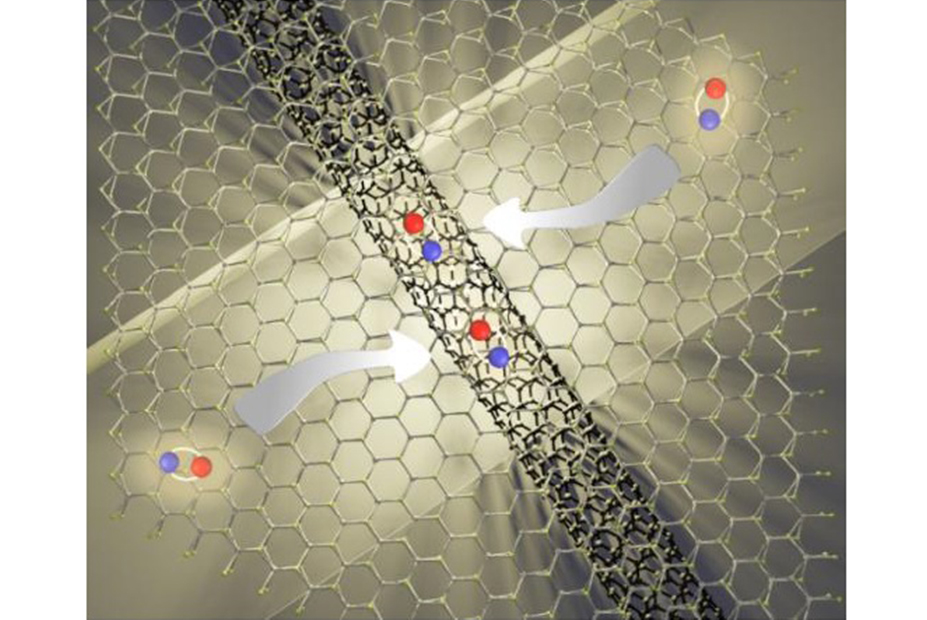
Resonant exciton transfer in mixed-dimensional heterostructures for overcoming dimensional restrictions in optical processes
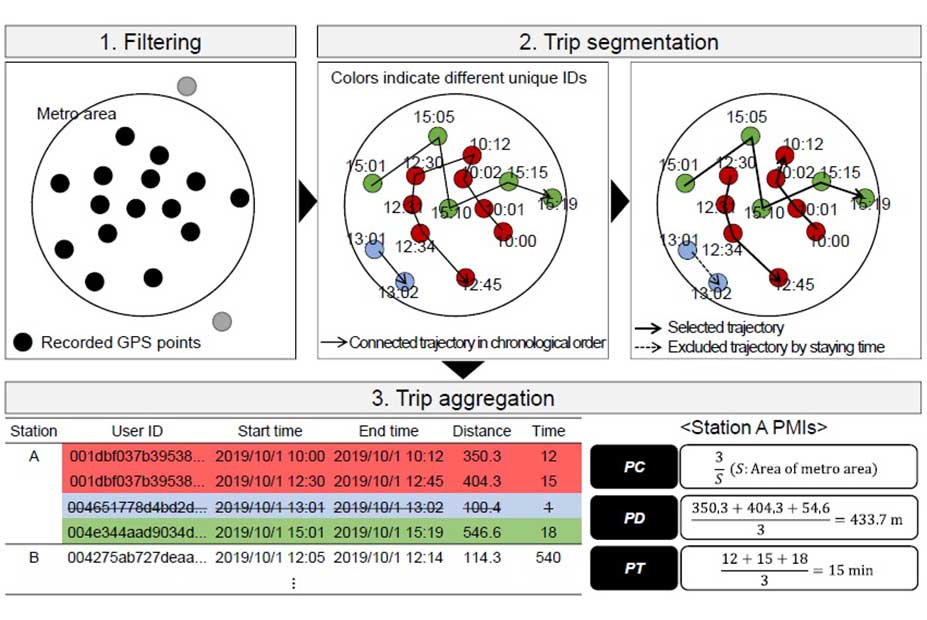
Pedestrian movement with large-scale GPS records and transit-oriented development attributes