Chemical reactions inherently require an input of energy, most commonly in the form of heat. Conventional methods of heating reaction vessels—such as applying fire or hot water—deliver energy to the entire container externally. These approaches, however, largely depend on fossil fuels as their primary energy source. Consequently, there is strong demand for the transition toward electrification of chemical processes using electricity generated from renewable energy sources.
In practice, chemical reactions occur only at extremely localized regions, involving just a few atoms or molecules. Within a large chemical reactor, only these limited active sites require energy to proceed with the reaction. Conventional thermal methods, however, distribute heat broadly throughout the reactor, resulting in considerable energy loss and inefficiency.
Addressing this challenge, a research team led by Lecturer Fuminao Kishimoto at the University of Tokyo has focused on microwave heating technology—the principle widely applied in household microwave ovens. By directing thermal energy specifically to the nanoscale regions where reactions occur, the team has pursued the development of a novel methodology that achieves both significant energy savings and electrification of chemical processes.
In their recent study, the researchers demonstrated that carefully designed zeolite catalysts can be employed to localize microwave energy at metal ion active sites. This enabled the efficient conversion of carbon dioxide, advancing chemical reactions with markedly improved energy efficiency.
These findings highlight a promising pathway toward the green transformation (GX) of the chemical industry. The strong compatibility of microwave heating with renewable energy supports electrification of chemical manufacturing, while the demonstrated high-efficiency CO₂ conversion represents a key advance in sustainable chemical engineering.

Papers
Journal: Science Advances
Title: Focused Thermal Energy at Atomic Microwave Antenna Sites for Eco-catalysis
Authors: Ryo Ishibashi, Fuminao Kishimoto*, Tatsushi Yoshioka, Hiroki Yamada, Koki Muraoka, Toshiaki Ina, Hiroki Taniguchi, Akira Nakayama, Toru Wakihara, Kazuhiro Takanabe*
UTokyoFOCUS | Press Release: https://www.u-tokyo.ac.jp/focus/en/press/z0508_00427.html
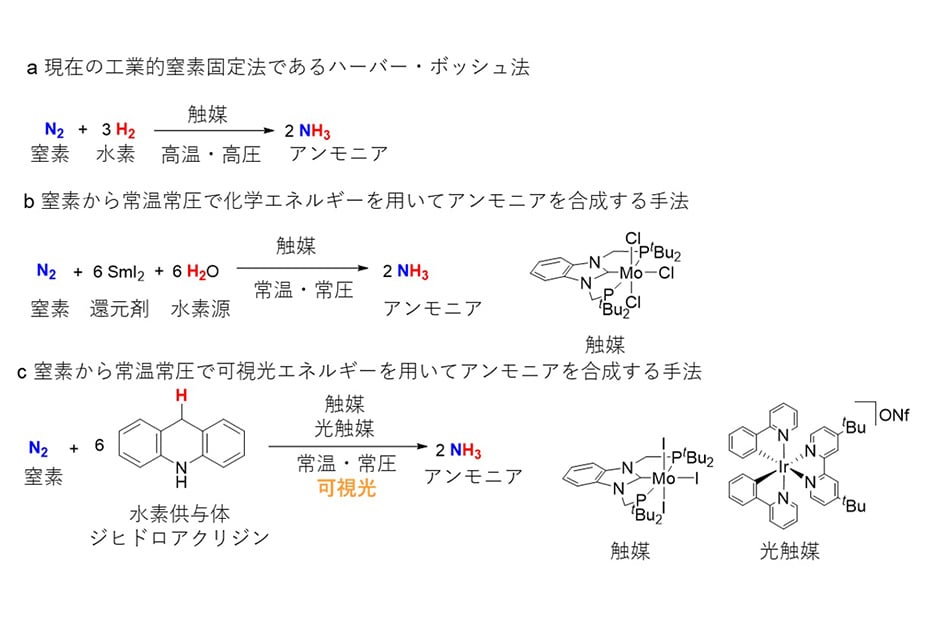
Catalytic nitrogen fixation using visible light energy
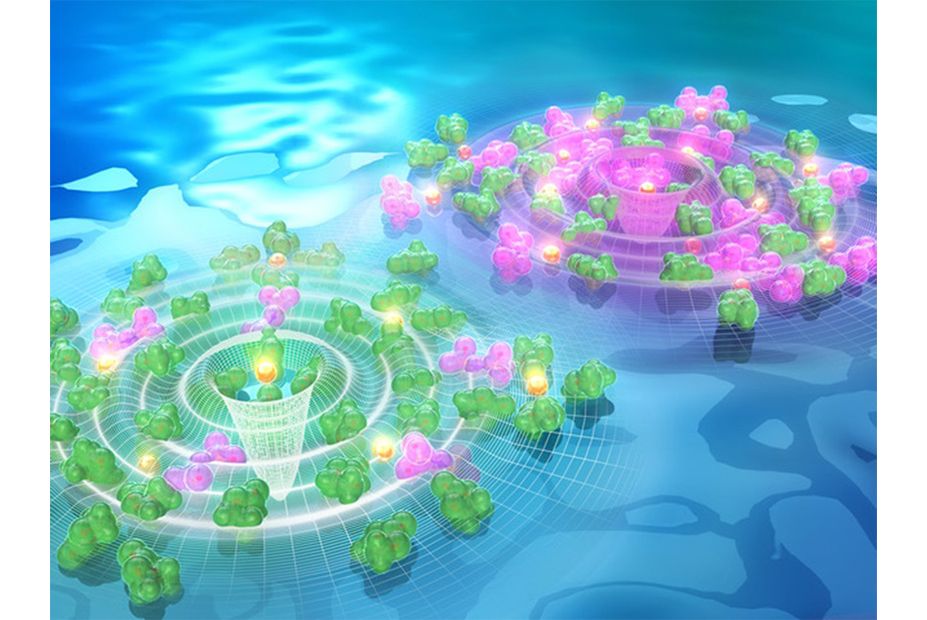
Liquid Madelung energy accounts for the huge potential shift in electrochemical systems