

A research team led by Professor Takeshi Tsuji at the University of Tokyo has successfully visualized, for the first time, the three-dimensional dynamics of deep supercritical geothermal fluids by integrating active seismic exploration images with earthquake observations. This breakthrough offers a high-resolution digital map of deep geothermal reservoirs, paving the way for next-generation “supercritical geothermal power generation.”
Conventional methods lacked the spatial resolution required to accurately identify geothermal reservoirs and their characteristics. This difficulty in defining drilling targets has limited large-scale development. By applying advanced seismic imaging techniques to the Kuju geothermal area in Kyushu, the team revealed the complete architecture of a supercritical geothermal system: magmatic fluids, supercritical water reservoirs, sealing layers, fracture zones that act as fluid pathways, and seismic activity induced by phase transitions. They also clarified the mechanism by which earthquakes are triggered when supercritical water changes into gas.
This achievement was made possible by extending the seismic data analysis method to handle seismic data even in mountainous terrain, where conventional exploration has been difficult. The study demonstrates that deep geothermal structures can be imaged at high resolution even with a limited number of seismic sources and receivers. Moving forward, the team aims to enhance structural imaging by deploying portable active seismic sources (PASS) together with dense seismic sensor networks in mountainous regions.
Supercritical geothermal power, which ultra-high-temperature fluids far deeper than conventional geothermal systems, has the potential to deliver unprecedented power output while minimizing risks such as induced seismicity or impacts on hot spring resources. By providing clear drilling targets and reliable development plans based on the images derived from these approaches, this research represents a major step toward the practical implementation of supercritical geothermal energy. The findings are expected to accelerate geothermal development both in Japan and worldwide, contributing to energy security and the realization of a carbon-neutral society.
The results were published online in Communications Earth & Environment (a Nature portfolio journal) on September 24, 2025.

Papers
Journal: Communications Earth & Environment
Title: Supercritical fluid flow through permeable window and phase transitions at volcanic brittle–ductile transition zone
Authors: Takeshi Tsuji*, Rezkia Dewi Andajani, Masafumi Katou, Akio Hara, Naoshi Aoki, Susumu Abe, Hao Kuo-Chen, Zhuo-Kang Guan, Wei-Fang Sun, Sheng-Yan Pan, Yao-Hung Liu, Keigo Kitamura, Jun Nishijima, Haruhiro Inagaki
DOI: 10.1038/s43247-025-02774-4
UTokyoFOCUS | Press Release: https://www.u-tokyo.ac.jp/focus/en/press/z0508_00423.html
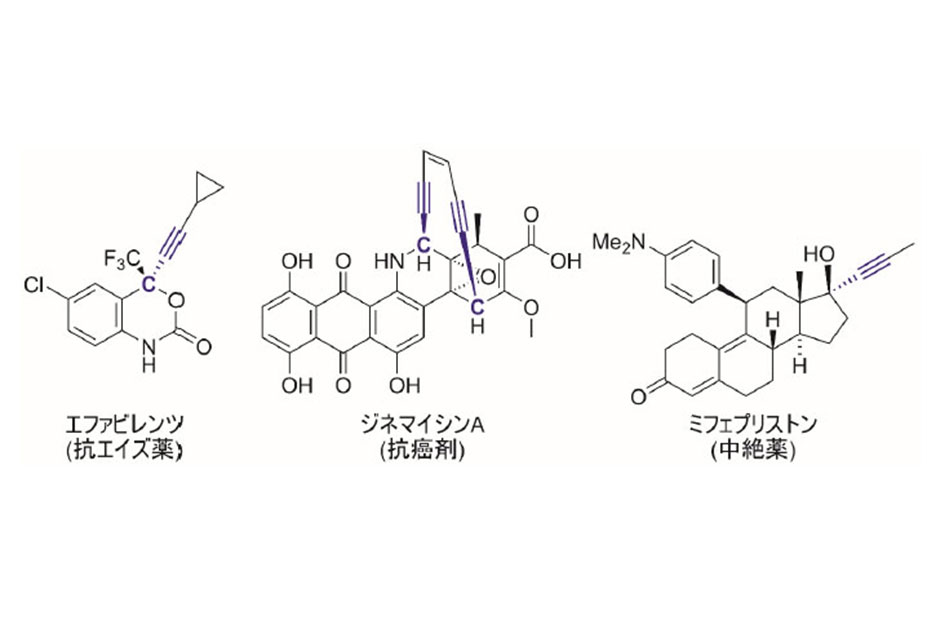
Interplay of diruthenium catalyst in controlling enantioselective propargylic substitution reactions with visible light-generated alkyl radicals
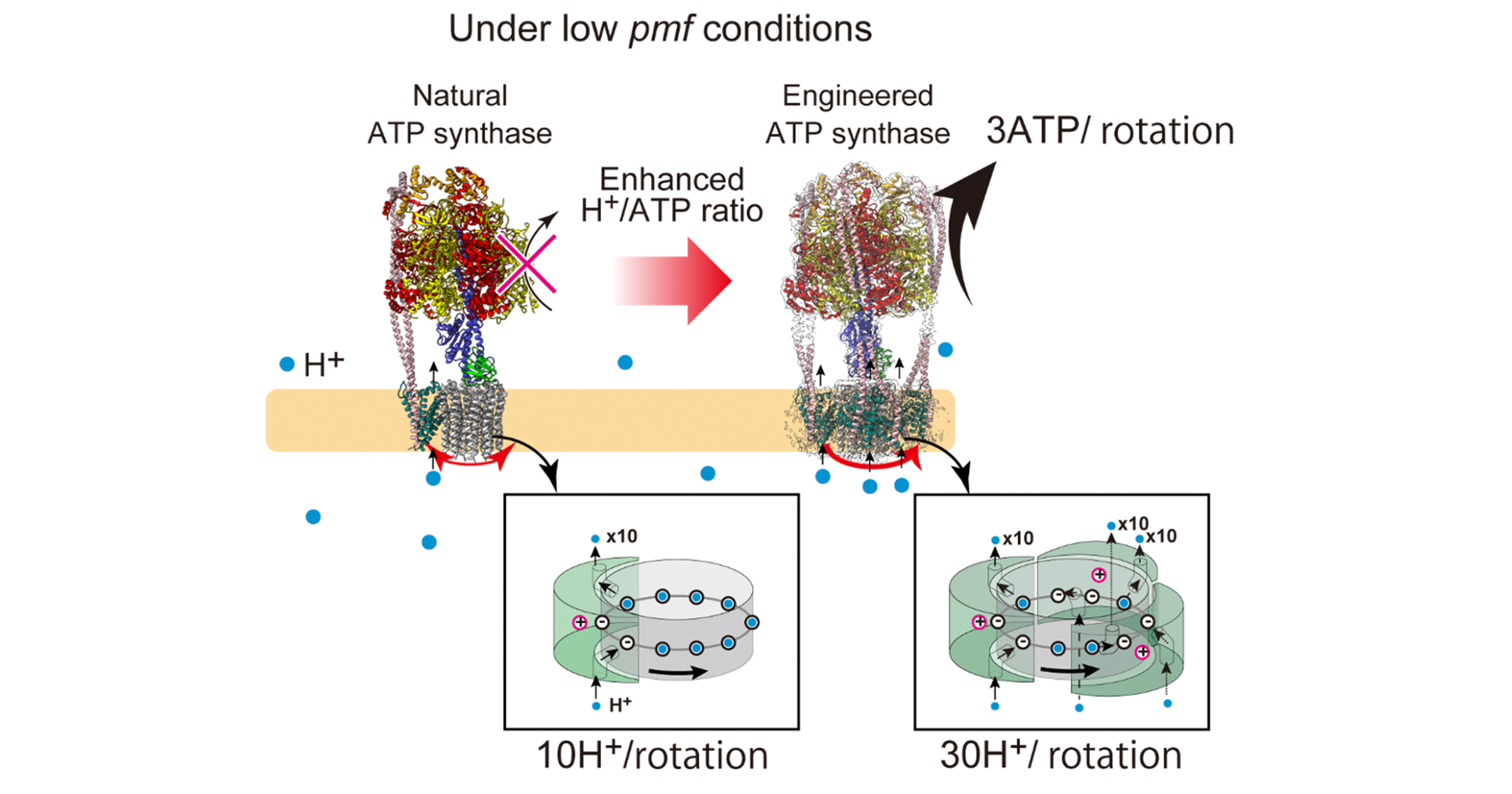
Engineering ATP Synthase with Enhanced Energy Transduction Beyond Natural Limits: Toward Applications in Cellular Engineering and Bio-manufacturing
