A research team has successfully developed a novel palladium nanocluster catalyst confined within a ring-shaped metal oxide molecule. The nanocluster, measuring less than 1 nanometer in diameter, features exposed palladium surfaces that enable highly efficient and stable catalytic activity. Notably, this catalyst exhibits reaction selectivity distinct from conventional palladium catalysts.
Using structural analysis and electron microscopy, the team revealed that palladium ions introduced into the ring structure assemble into ultrasmall clusters under hydrogen atmosphere. The molecular ring not only stabilizes the nanocluster against aggregation but also allows the metal surface to remain accessible for catalysis.
This unique structure enables highly selective hydrogenation of multifunctional organic molecules, where specific bonds are preferentially reduced. Furthermore, the catalyst maintains its performance after repeated use, demonstrating excellent durability.
This breakthrough offers a new strategy for the precise synthesis and stabilization of reactive metal nanoclusters. The approach holds promise for applications in sustainable catalysis, energy conversion, photofunctional materials, chemical sensing, and molecular electronics.

Papers
Journal: Advanced Science
Title: Surface-Exposed Pd Nanocluster Confined within a Ring-Shaped Polyoxometalate for Selective Hydrogenation
Authors: Rui Xi, Kentaro Yonesato, Takafumi Yatabe, Yoshihiro Koizumi, Soichi Kikkawa, Seiji Yamazoe, Koji Harano, Kazuya Yamaguchi, Kosuke Suzuki*

Simultaneous Production of Aromatic Compounds and H2 by Supported Non-Precious Metal Nanoparticle Catalysts
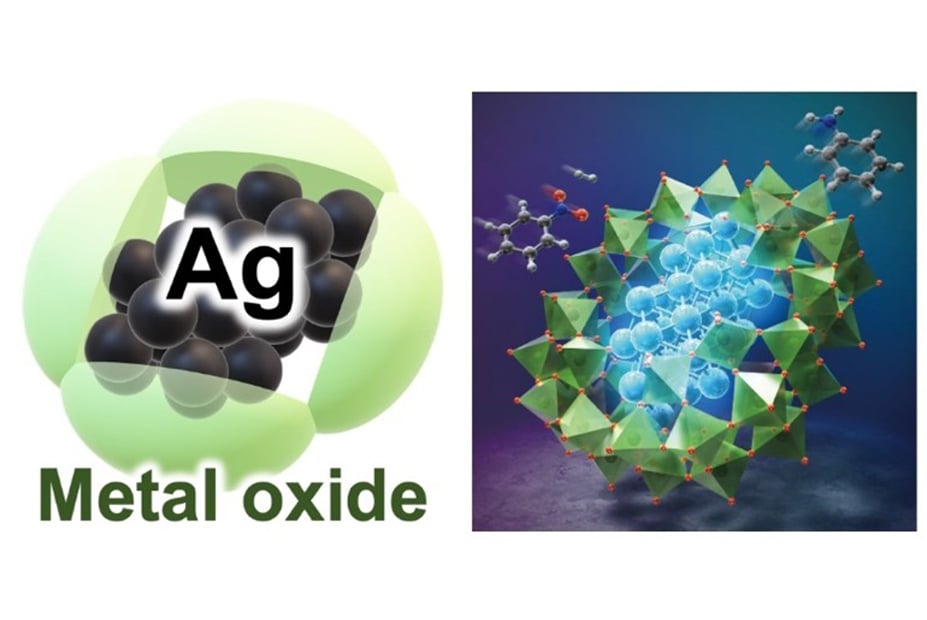
Surface-exposed silver nanoclusters inside molecular metal oxide cavities